
Tourist Attractions in Valencia
La Lonja (The Silk Exchange)
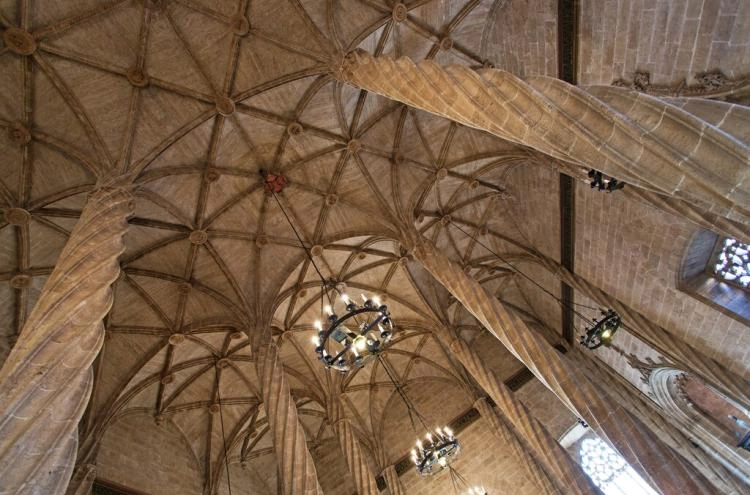
In the very heart of Valencia stands the Silk Exchange (Lonja de la Seda), one of the most beautiful examples of European civil Gothic architecture. Declared a UNESCO World Heritage Site in 1996, the Lonja is not just a monument: it is a journey back in time to an era when the city was a key hub of international trade.
Built between the 15th and 16th centuries, the Lonja was the setting for transactions, agreements and meetings that shaped the economic destiny of Valencia and the Mediterranean. Today, it continues to impress with its monumental scale and its spaces, from the Columned Hall to the Orange Tree Courtyard.
City of Arts and Sciences Monuments
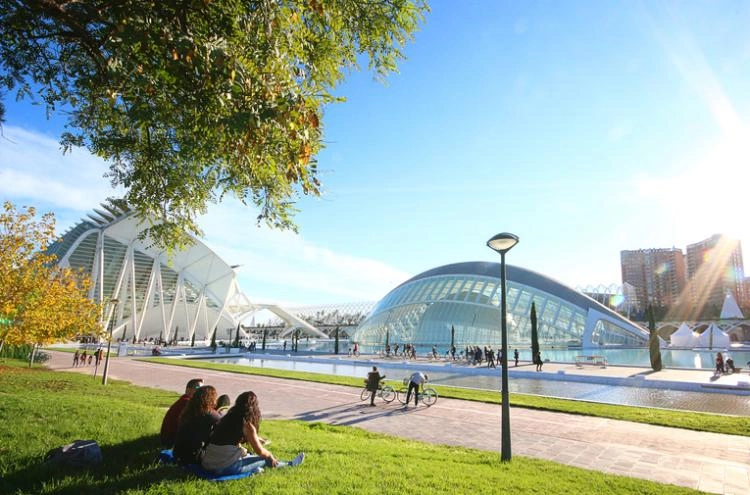
The City of Arts and Sciences is a complex of attractions housed in strikingly spectacular futuristic buildings. Designed by Santiago Calatrava, it stretches for almost two kilometres along the former riverbed of the Turia.
The buildings are surrounded by gardens and some are reflected in large pools of water, creating a magical effect. It’s the perfect place to spend the day with friends or family and take countless photos.
Valencia Cathedral
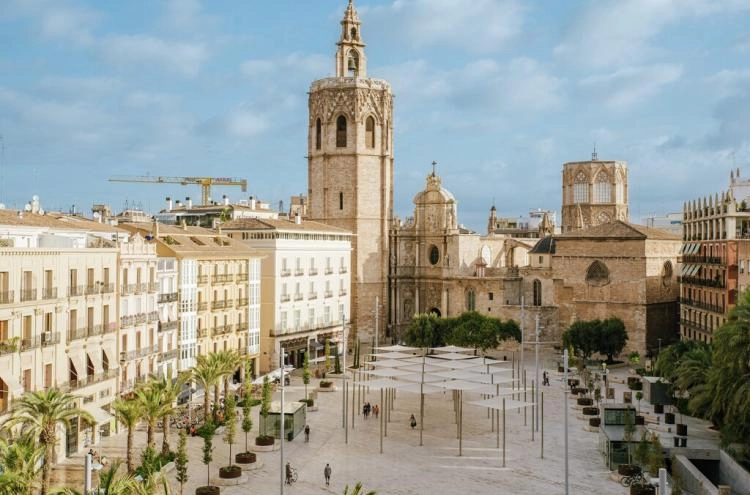
Valencia Cathedral is one of the city’s most iconic landmarks thanks to its emblematic bell tower: the Miguelete. Visiting it is like taking a journey through 2,000 years of history.
It was built between the 13th and 15th centuries on the remains of a Roman temple that later became the mosque of Arab Balansiya. The cathedral features a rich blend of architectural styles: from Romanesque elements at the Almoina Gate to the predominant Gothic style, with some Baroque touches.
Church of San Nicolás, the Valencian “Sistine Chapel”
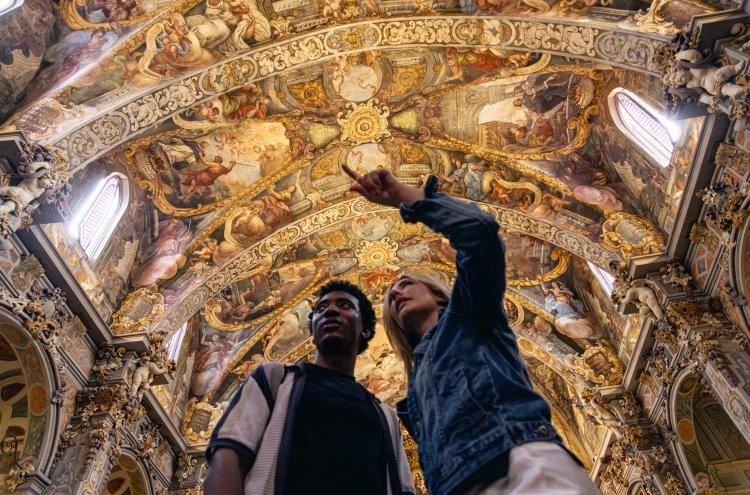
The narrow access through an alleyway from Calle Caballeros does not hint at the grandeur awaiting you inside: The Church of San Nicolás de Bari and San Pedro Mártir is one of the oldest in Valencia, and perhaps the most spectacular.
Built in the 13th century, the church preserves its elegant Gothic structure. But what makes it truly special is the Baroque decoration of its interior. Look up. The vault and apses are completely covered with magnificent frescoes depicting scenes from the lives of Saint Nicholas and Saint Peter Martyr. They were designed by the renowned Baroque artist Antonio Palomino and executed by his disciple Dionís Vidal in the 17th century.
Central Market
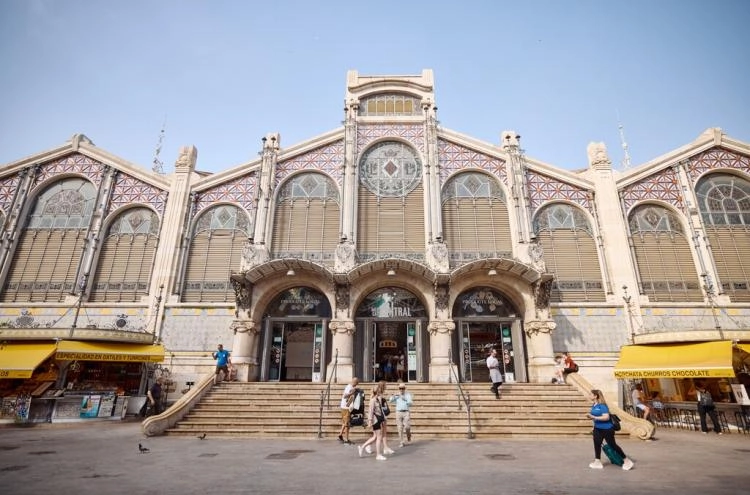
Visiting Valencia’s Central Market is a multisensory gastronomic experience, as well as an immersion in local culture.
Do you see the parakeet crowning the magnificent modernist building, the symbol of the Market? It’s a playful nod to the lively buzz of sellers and shoppers echoing inside. Aromas from the Huerta and the Mediterranean waft through its more than 250 stalls selling fresh produce. And the vibrant colours of the fruit, vegetables, meat and fish on display rival those of its tiles and stained-glass windows.
Serranos Towers
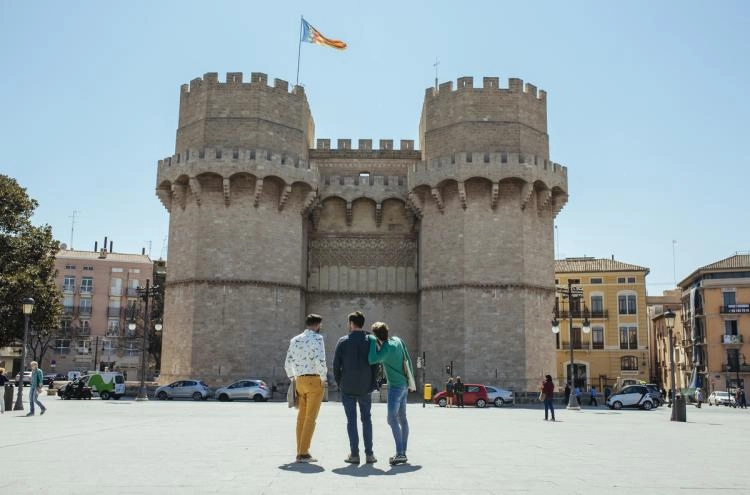
In the 14th century, King Peter IV ordered the reinforcement of the medieval city walls and commissioned Pere Balaguer to build a new monumental gate. The Serranos Towers were conceived not only as a defensive structure, but also as a symbol of the prestige and growth of medieval Valencia.
The two grand polygonal towers flanked the main entrance to the city from Aragón. Through them passed kings and ambassadors, as well as merchants and travellers (the “serranos” who gave the towers their name).
Besides serving as a defensive bastion, the towers were used as a prison for nobles and knights between the 16th and 19th centuries. In 1865, they survived the demolition of the medieval walls. During the Spanish Civil War, they safeguarded masterpieces from the Prado Museum. Today, they are the annual setting for the Crida (the traditional opening ceremony of the Fallas festival).